Looking Beyond "Not Paying Attention"
- shevangigandhi
- Jun 28
- 1 min read
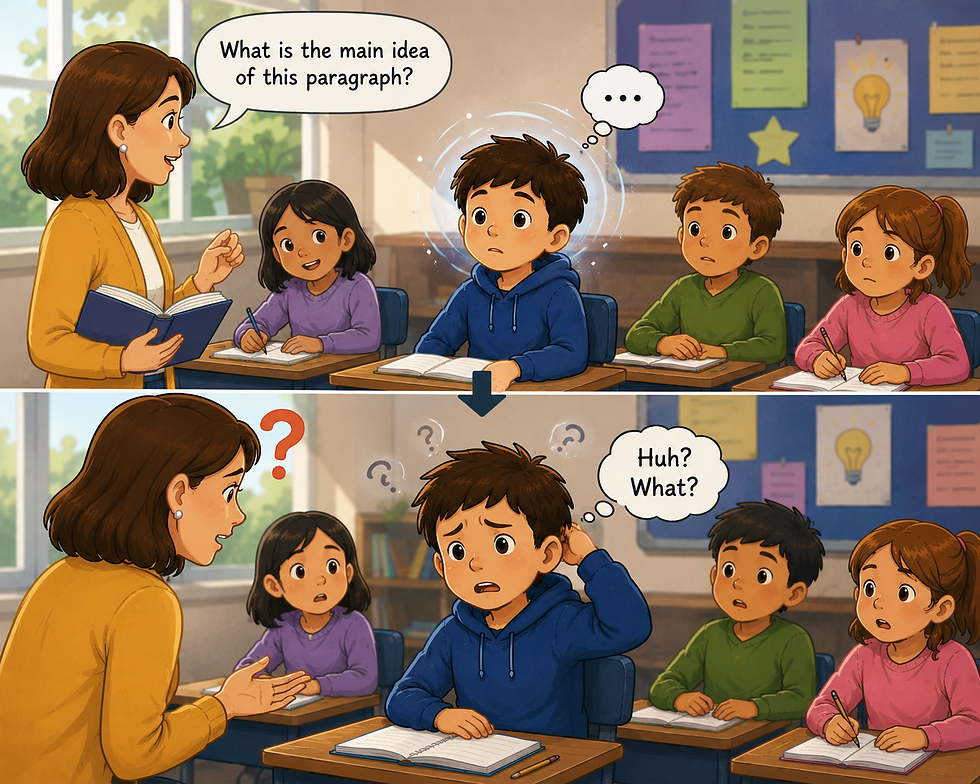
Imagine asking a child a question in class.
Halfway through the sentence, they stop responding. They stare ahead for a few seconds. Then, just as suddenly, they continue as though nothing happened.
Most people would probably assume they weren't paying attention.
But sometimes, that's not what's happening at all.
Some children experience absence seizures - brief episodes of altered awareness caused by abnormal electrical activity in the brain. They usually last only a few seconds, and because there are no dramatic movements or loss of consciousness, they can easily be mistaken for daydreaming or inattention.
The challenge is that these episodes can happen many times throughout the day.
Each one is brief. But together, they can mean a child repeatedly misses small pieces of information:
a teacher's instruction,
part of a lesson,
the start of a conversation,
or an important explanation.
Over time, this can affect learning, concentration, confidence, and even behaviour.
A child who seems distracted may actually be trying to make sense of information they unknowingly missed.
A child who appears forgetful may never have fully processed what was said in the first place.
This is why behaviour should always be understood in context.
Not every child who struggles to pay attention has a behavioural difficulty.
Sometimes, there's a neurological explanation hiding in plain sight.
As mental health professionals, educators, and parents, one of the most valuable things we can do is stay curious before we become certain.
Because sometimes, the difference between "They weren't listening" and "Something else is going on" can change a child's life.


Comments